Creative Thinking for Complex Problem Solving
Creative Thinking for Complex Problem Solving
What You'll Get
 Introduction: Welcoming Complexity
 Introduction: Welcoming Complexity
Watch a sneak peek
-
 Build Confidence For the Future—A sneak peek of the course

2 Video Lessons
-
Welcome Complexity: An Introduction to Mindsets and Methods—Delve into the essential components of curiosity, experimentation, and iteration to welcome complexity as an opportunity.
-
Play x Rigor: The Perfect Problem-Solving Duo—Understand how play and rigor act as powerful tools in navigating complex and dynamic spaces.
1 Assignment
-
Articulate a Complex Problem: In your organization, reflect on how play and rigor show up.
2 Discussions
-
When have you seen the power of adding more imagination or creativity into addressing a complex problem? What was the impact?
-
What common complex problem-solving pitfall tends to happen most on your team: oversimplifying, overanalyzing, or quick fixes? Why and how could you counter it?
2 Resources
-
Mindsets that Drive Complex Problem Solving: This guide provides information on embracing the mindsets of exploration, empathetic curiosity, and experimentation.
-
Overcoming Common Pitfalls: Strategies to recognize and address common pitfalls such as oversimplification, overanalysis, and premature solution finding.
 Week 1: Open Up the Problem With Curiosity
 Week 1: Open Up the Problem With Curiosity
4 Video Lessons
-
Expand the Question: Engage Stakeholders and Invite Fresh Perspectives—Learn to uncover and ask the right questions by involving diverse stakeholders
-
Build Empathy: Put Humans at the Center—Apply critical thinking strategies to understand the biases and needs of stakeholders using three IDEO case studies
-
Diverge and Converge: Generate Possibilities and Make Choices—Explore IDEO’s diverge/converge process, and the powerful role ambiguity plays in problem solving
-
The Science of Play: Why Creative Problem Solving Works—Explore the neuroscience behind imagination and play, and why these concepts are so vital in problem-solving spaces.
1 Assignment
-
Refine Your Problem Statement: Reflect on and apply techniques to deconstruct assumptions, broaden perspectives, refine your central problem statement based on human needs and resources.
3 Discussions
-
What “sacred myths” are present in your organization? How might they limit creativity and innovation?
-
Does your organization oversimplify, overanalyze, or jump to solutions when facing complexity? Why?
-
How can leaders nurture acceptance of uncertainty in the innovation process?
2 Resources
-
Uncover Assumptions: Tools to help you uncover starting points, hunches, and strong beliefs about your problem.
-
Right-Size the Question: Learn how to sharpen your problem statement with lessons from IDEO case studies.
 Week 2: Get Tangible Through Experimentation
 Week 2: Get Tangible Through Experimentation
4 Video Lessons
-
Level up Ideas—Techniques to evolve early hunches into tangible concepts
-
Build confidence—Learn to assess concepts using IDEO’s Desirability, Viability, and Feasibility framework
-
De-risk Through Experimentation—Learn how to use prototyping to de-risk your solutions
-
The Art of Observation—Techniques for capturing unbiased observations from your experiments
1 Assignment
-
Create Prototypes: Bring your solutions to life with rapid prototyping, uncover hidden assumptions, and build resilience in your solutions.
3 Discussions
-
What technique(s) helped you most in leveling up early ideas into testable concepts?
-
How might you increase the diversity of perspectives involved in shaping and assessing early prototypes?
-
In what ways can leaders nurture acceptance of uncertainty and nonlinearity in the early innovation process?
2 Resources
-
Tools for Prototyping and Experimentation: Guides on co-creation sessions, mock pitches, and boundary concepts.
-
Simulating Strategies and Solutions: Learn how to use strategy board games as tools for fostering problem-solving, creativity, and innovation.
 Week 3: Iterate As You Learn
 Week 3: Iterate As You Learn
3 Video Lessons
-
Meaning Making: Identify Patterns and Themes Through Synthesis—Balance playful synthesis with rigorous analysis to build compelling narratives
-
Pivot and Iterate—Techniques to adapt and evolve future solutions
-
Learn from The Future—Use future scenarios to pressure-test ideas and adapt to evolving concepts
1 Assignment
-
Uncover Deep Insights: Apply the techniques of affinity clustering, stakeholder critiques, and working backward from future visioning to derive meaningful insights and identify moments to iterate or pivot.
3 Discussions
-
What metrics would indicate you are making meaningful progress amidst complexity and uncertainty?
-
What insights challenged your assumptions about this problem space or audience?
-
In what ways can experiments that “fail” still provide value in complexity?
2 Resources
-
Find the Implications from Insights: Strategies for leveraging insights in problem-solving.
-
Measure Progress: Methods to track progress and align with future scenarios.
 Conclusion: Maintain Momentum
 Conclusion: Maintain Momentum
1 Video Lesson
-
Sustain Commitment—Learn how to inspire behavioral change and sustain commitment.
1 Assignment
-
Reflect on the Mindsets and Methods to Drive Sustained Change: Determine everyday rituals that motivate teams and counter change fatigue. Adopt lenses assessing current strategies while envisioning aspirational futures.
2 Discussions
-
Why is it important to define success by outcomes rather than only concrete outputs/deliverables? How might this shape your approach?
-
What everyday rituals can leaders employ to keep teams inspired and committed for the long haul of complex problem-solving?
1 Resource
-
Temperature Check: Evaluate your progress and strategize the next steps to enhance confidence in your problem-solving direction.
Meet Your Instructors

Kate Schnippering
Former Executive Design Director at IDEO
Kate Schnippering is an Executive Design Director at IDEO, with a focus on creative technology. Kate brings ‘build to learn' experimentation to make real the futures we imagine. She creates conditions for teams and partners to immerse in imagination as a collective act—uplifting dreams and rigor in equal measure. In nearly a decade at IDEO, Kate’s developed teams, leaders, and organizations.

Kate Schnippering
Former Executive Design Director at IDEO
Kate Schnippering is an Executive Design Director at IDEO, with a focus on creative technology. Kate brings ‘build to learn' experimentation to make real the futures we imagine. She creates conditions for teams and partners to immerse in imagination as a collective act—uplifting dreams and rigor in equal measure. In nearly a decade at IDEO, Kate’s developed teams, leaders, and organizations.
Her work investigates pathways to positive, systemic change for people and nature—by harnessing expressive technologies to make science & data relatable, and grow the power of everyday people. She’s built a real-world ‘magic school bus’ that teaches rover engineering to middle schoolers on Mars, designed a product for patients to partner directly with medical researchers in the study of rare diseases, and guided a youth mental health platform from proof of concept to delivery.

Michelle Lee
Partner and Executive Managing Director at IDEO Play Lab
Michelle Lee is a Partner and Managing Director at IDEO, where she has applied her passion for play to leading interdisciplinary teams of designers and researchers in bringing engaging, interactive, and playful experiences to market. She believes in leveraging the principles of play to connect with people on a deeper emotional level that captivates, delights, and empowers.

Michelle Lee
Partner and Executive Managing Director at IDEO Play Lab
Michelle Lee is a Partner and Managing Director at IDEO, where she has applied her passion for play to leading interdisciplinary teams of designers and researchers in bringing engaging, interactive, and playful experiences to market. She believes in leveraging the principles of play to connect with people on a deeper emotional level that captivates, delights, and empowers.
Through her work, she has helped clients enhance workplace culture, championed responsible digital design, inspired underrepresented students to pursue careers in STEM, and supported organizations as they adopted practices in line with a circular economy. Michelle has shared her passion for play at SXSW, The Delight Conference, The Culture Summit, Circularity 23 and through numerous podcasts and articles.
FAQs
We offer three types of courses: self-paced courses, cohort courses, and certificate programs. Cohort courses run on a set calendar, with fixed start and end dates. Course learning is self-paced within those dates and requires approximately 4-5 hours per week over 5 weeks. Courses consist of videos, activities, assignments, access to course teaching teams, and feedback from a global community of learners. There are also optional 1-hour video Community Conversations, held weekly by the teaching team.
All of our cohort courses are fully online, so you can take them from any time zone, anywhere in the world. With our cohort course experience, while you'll be learning alongside other learners, you'll still have the flexibility to work at the pace that fits your own schedule. There aren't mandatory live components, so you don't have to worry about having to log in at a specific time. At the same time, you'll have access to a teaching team who will answer your questions and give feedback on your assignments throughout the course.
Cohort courses run on a set calendar with fixed start and end dates. You will be learning alongside other learners, but still have the flexibility to work at a pace that fits your own schedule—there aren't mandatory live components. In cohort courses, you'll have access to a teaching team who will answer your questions and give feedback on your assignments throughout the course. Self-paced courses allow you to start, learn, and finish a course completely on your own schedule. Since courses are on-demand, there's no community experience of going through the material with other learners. In on-demand courses, there is no teaching team providing feedback on your submissions.
Yes, after completing the course you will receive a certificate of completion. We also have certificate programs that consist of multiple courses. After completing a certificate, you will receive a certificate of completion via email as a downloadable PDF within 1-2 weeks of completing the final required course. Certificates are configured for uploading and sharing on LinkedIn.
IDEO U courses are not currently eligible for university credit.
You'll need a stable internet connection and a device (computer, tablet, or phone) with a modern web browser such as Chrome, Firefox, Safari, or Edge. Some course activities may work better on a computer than a mobile device. You'll also need to be able to view videos, which requires a browser that supports HTML5 video.
Once you enroll in a course, you can access it by logging into your IDEO U account at ideou.com and clicking on your profile icon in the upper right corner. Then click on "My Courses" to see all of your enrolled courses. Click on the course you want to access to go to the course page. Your courses are always available in your account, even after the course end date.
We offer a 10-day satisfaction guarantee for our cohort courses (starting from the course start date). If you're unhappy with the course for any reason, reach out to us within 10 days of the course start date and we'll give you a full refund. To process a refund, contact us.
We share exclusive offers with our email list. Financial assistance is available for teachers, students, nonprofit workers, and those in need of government assistance. Visit our financial aid application for more information. For orders of 10 seats or more, contact hello@ideou.com for bulk purchase pricing.
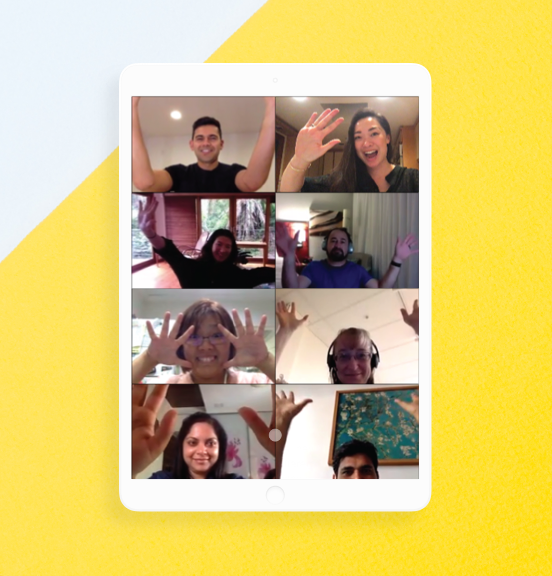
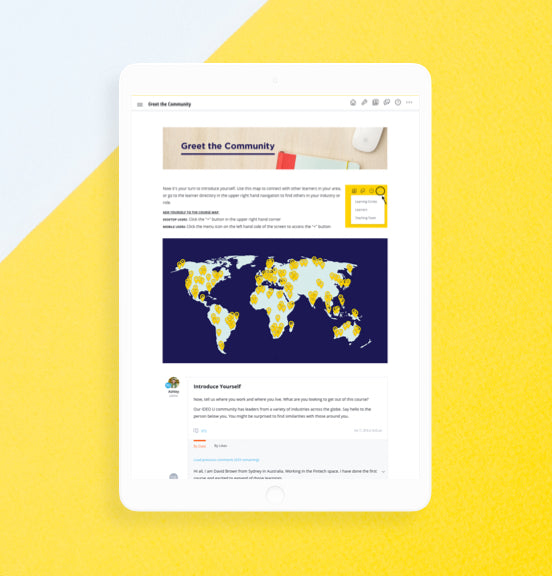
Collaborate with a Global Community
Work with Expert Coaches
Our teaching team has extensive applied industry knowledge. They'll help deepen your understanding and application of the course content by facilitating written discussions, live video moments, and assignment feedback.
Expand Your Network
Join virtual live discussion groups for deeper conversation, reflection, and connection led by teaching team members and available multiple times a week across time zones.
Receive Feedback
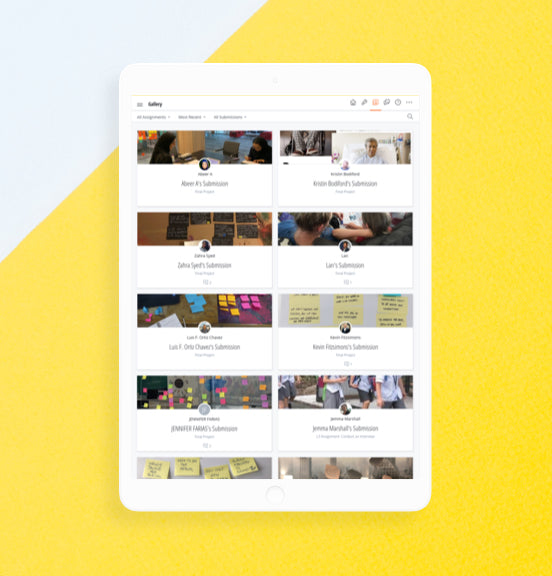
Gain tips, techniques, and a downloadable feedback guide; and share and receive feedback on assignments from peers.
Loved by Learners Across the Globe


Creative Thinking for Complex Problem Solving
“Michelle has a passion for thinking BIG, addressing complexity with playful creativity, and somehow making it all fun! She understands deeply the importance and implications of play across contexts, industries, and solutions - and uses it masterfully in her own work and in helping others come up with solutions and innovations. I would 100% choose her as my teacher and mentor in this space every time - and have!”
Creative Thinking for Complex Problem Solving
"Kate and her team brought people together from across the Ranger Business to engage in complex strategy development through a playful and curious program of work. With prototypes and ideas in hand, we explored new places and met new people, growing and learning together as a team. These glimpses into the future continue to inspire us, have changed our approach to work and compel us to continuously adjust and refine our Ranger strategy to support future generations."
Learners Also Purchased
-
![Human-Centered Systems Thinking]()

Human-Centered Systems Thinking
Design solutions that shift complex systemsCohort Course 5 Weeks- Regular price
- $899
- Sale price
- $899
- Unit price
- per
-
![Foundations in Design Thinking Certificate]()

Foundations in Design Thinking Certificate
Learn the core skills and mindsets of design thinkingCertificate Program 2-3 Months- Regular price
- $1,598
- Sale price
- $1,598
- Unit price
- per
-
![Designing Strategy]()

Designing Strategy
Unite analytical thinking and creativity to create a winning strategyCohort Course 5 Weeks- Regular price
- $899
- Sale price
- $899
- Unit price
- per



Enroll As a Team
The practice and application of design thinking, innovation, and creativity is highly collaborative and team based—which is why we believe that learning is better together. Take a course as a team and develop new skills and mindsets, have deeper discussion during course kickoff and debrief sessions, and build a shared understanding.